
Manchester City have reportedly been found guilty of the majority of 115 financial rule charges, leaving one of football’s most successful clubs facing an uncertain future. The findings, first reported by The Athletic, follow a years-long investigation. No punishment has been announced, and the club is expected to appeal.
The scale of the case is staggering: it spans 14 seasons, a period in which City won seven Premier League titles. Their dominance also made them the first English club to win the top division four times in a row. Now those achievements sit alongside the prospect of heavy fines, points deductions or even expulsion from the competition they have dominated.
In a statement, City said: “The Premier League process remains ongoing, with significant elements to be completed.” The club said it had diligently respected due process for eight years, on the basis that the league’s board and executive would act as an independent, impartial and fair-minded regulator, free from partisan influence.
The charges announced in February 2023 included 54 alleged breaches involving a failure to provide accurate financial information across nine seasons, and 14 concerning details of player and manager payments over the same period. There were also 12 counts relating to compliance with UEFA and Premier League financial rules, and 35 concerning a failure to cooperate with the league’s investigation.
At the heart of the allegations was the claim that City had artificially inflated their income by presenting money from the owner as sponsorship revenue. City denied all the allegations when the charges were brought, saying they were surprised and supported by what they called a “body of irrefutable evidence”. The reported outcome does not yet establish publicly which individual charges have been upheld.
The club’s transformation began in 2008, when Sheikh Mansour, a billionaire member of Abu Dhabi’s ruling family, bought City. His wealth helped secure some of the world’s best players, and a first Premier League title followed in 2012. Two years later, UEFA sanctioned the club for breaching financial fair play rules, which limited losses to deter overspending.
The scrutiny intensified after German magazine Der Spiegel published details from leaked emails in 2016. It alleged that City had deceived UEFA by artificially inflating sponsorship revenue from state-owned companies. City and the companies involved denied wrongdoing. The club said the emails had been obtained illegally and were being used to damage its reputation.
Behind the disclosures was Rui Pinto, the Portuguese computer hacker who established Football Leaks in 2015 after moving to Budapest. Initially publishing material on his own website, he later met Der Spiegel journalist Rafael Buschmann and shared tens of millions of documents. Journalists in Hamburg worked through the material, revealing aspects of football’s finances that had previously remained hidden.
Pinto remains a divisive figure. His defenders regard him as a major whistleblower who exposed the darker side of the game; his critics insist that hacking is a crime, regardless of what it uncovers. His actions have also brought personal consequences, including a conviction in 2023 and several court cases. One case brought by sports bodies, including Benfica, was dismissed on the basis that he had already been convicted over similar charges.
City’s legal battles have already produced a significant reversal. In 2020, the club was found to have broken UEFA’s rules, but successfully appealed against a two-year ban from European competition. More titles followed on the pitch before the Premier League brought its own charges in February 2023.
The length of the Premier League proceedings has drawn mounting scrutiny. Asked about the delay before the latest news emerged, the league’s chief executive described the case as hugely complex, noting that the hearing had lasted 12 weeks and that the process had taken longer than expected.
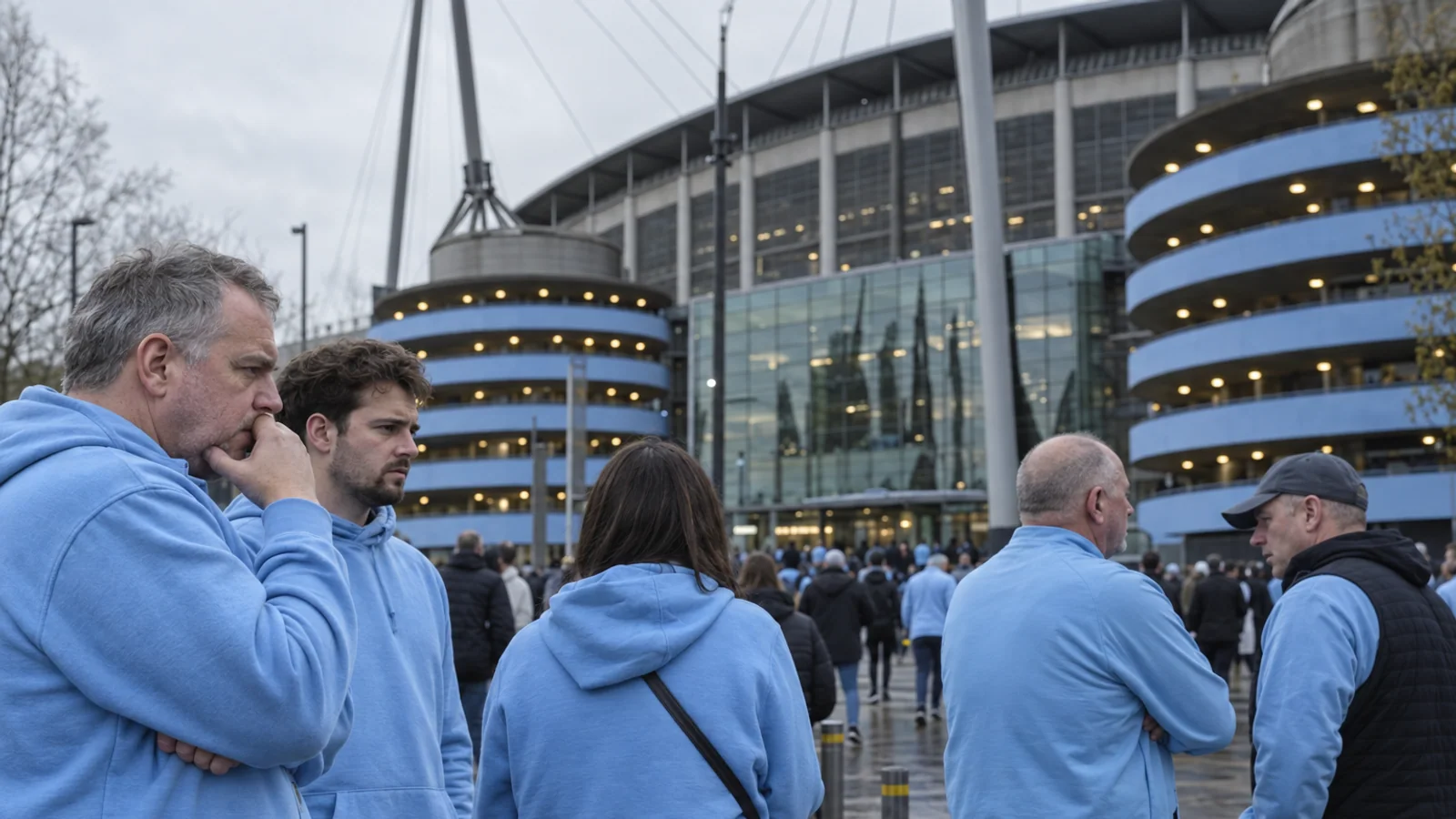
Outside the Etihad Stadium, supporters expressed a mixture of resignation, caution and confidence in the club’s ability to fight its case. “If they broke the rules, then they broke the rules,” one fan said. Another resisted the suggestion that City’s achievements should already be regarded as tainted while proceedings remained unfinished. Others pointed to the club’s money and infrastructure as reasons to believe it would weather the crisis.
The consequences could extend beyond any sporting punishment. Rival clubs are weighing the possibility of seeking compensation or damages if they believe City’s rule-breaking cost them titles. Such claims would add another layer of legal uncertainty to a process that is already far from complete.
This season was meant to mark a new era for City, with a new manager and a new squad. Instead, attention has returned to the foundations of their success. Until the findings are confirmed, sanctions are decided and any appeal is resolved, the full consequences for the club—and for the Premier League—remain unsettled.