
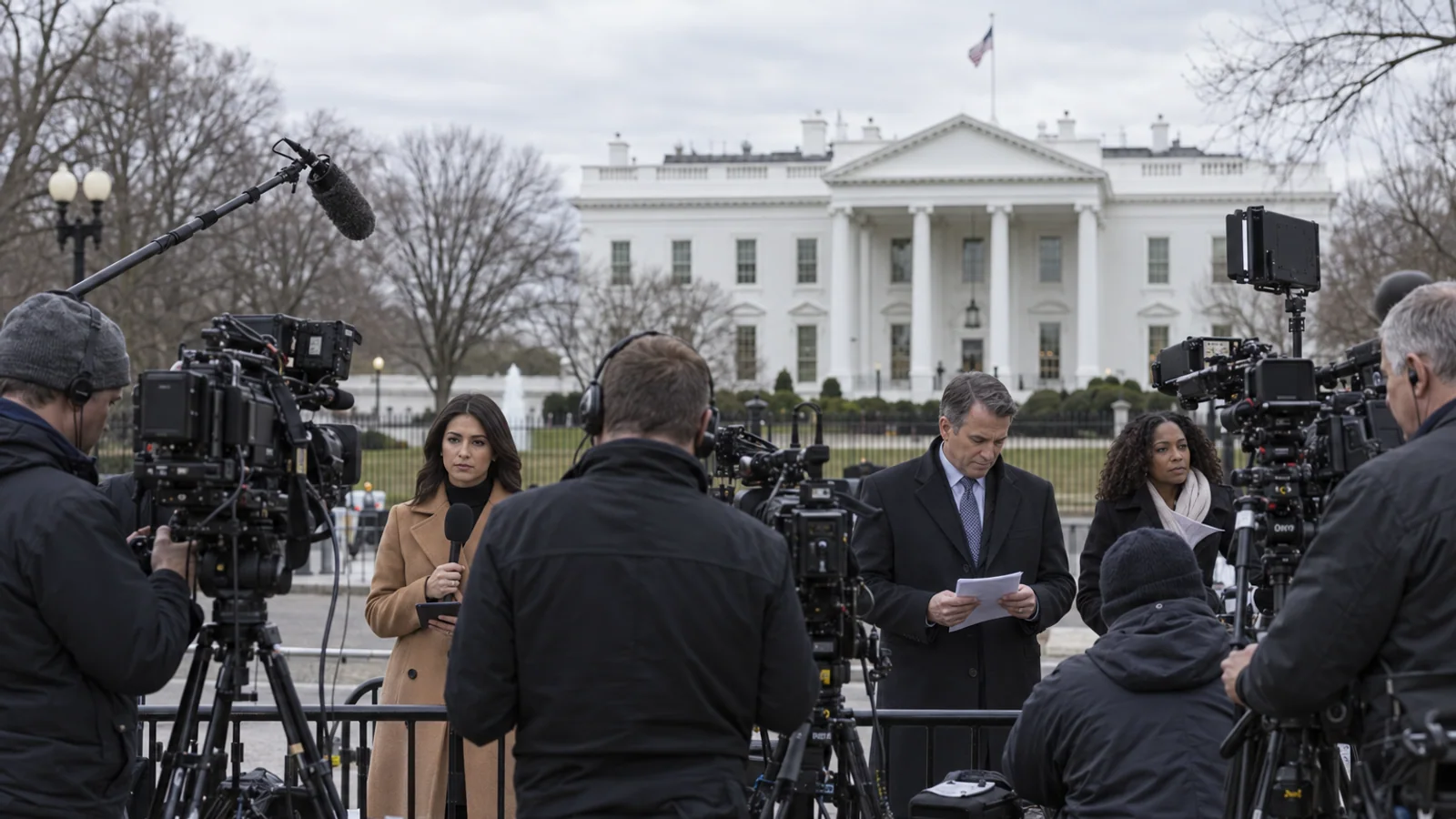
Major U.S. television networks have resumed coverage of events at Donald Trump’s White House, ending a brief boycott while the administration has been evading a federal judge’s order to restore access to excluded reporters. After a week of collective protest, the networks have returned to live broadcasts under what they describe as a flexible strategy.
The confrontation began when Trump announced on his social platform, Truth, that he wanted to ban CNN, MSNBC and Politico. He accused the three outlets of producing false news, lies and coverage systematically hostile to his administration. The following day, their reporters were denied entry to the White House complex and their passes were confiscated.
The press responded together. CNN, MSNBC and Politico filed a joint lawsuit alleging violations of the First and Fifth Amendments, while the major television networks—including the more conservative Fox News—suspended or reduced pooled coverage of presidential events. At one Trump press conference, there were no journalists or microphones in front of him, and nothing could be heard. During the week of protest, networks also withheld some footage of the summit with Chinese President Xi Jinping.
In court, the administration’s lawyers argued that access to the White House was a privilege rather than a right. They also accused the outlets of alleged breaches of decorum and leaks of confidential information. The federal judge, however, found that the administration had violated the Fifth Amendment’s guarantee of due process by withdrawing access without notice or an opportunity for the journalists to defend themselves. The ruling ordered the White House to return their passes and credentials immediately.
The decision to resume broadcasts does not repair the fractured relationship between Trump and the press. This dispute belongs to a much longer history of hostility. During his first term, Trump revoked the credentials of two journalists. In his second, he excluded CBS from the Oval Office and Air Force One and sued the staff of The New York Times. The broader confrontation has also included a search of a Washington Post reporter’s home and a lawsuit against the Post-Dispatch, alongside repeated attempts to discredit or insult journalists on air—particularly women.
Against that backdrop, Trump has launched his own project, Trump TV: a YouTube channel operating around the clock. Various observers have described it as an attempt to create a kind of state television curated entirely by the administration.
The stakes extend beyond the working conditions of individual reporters. When a political authority claims the power to decide who may ask questions and who may not, regardless of its political allegiance, it threatens freedom of the press as a whole. In Trump’s case, the move is probably also tied to the approaching midterm elections.