
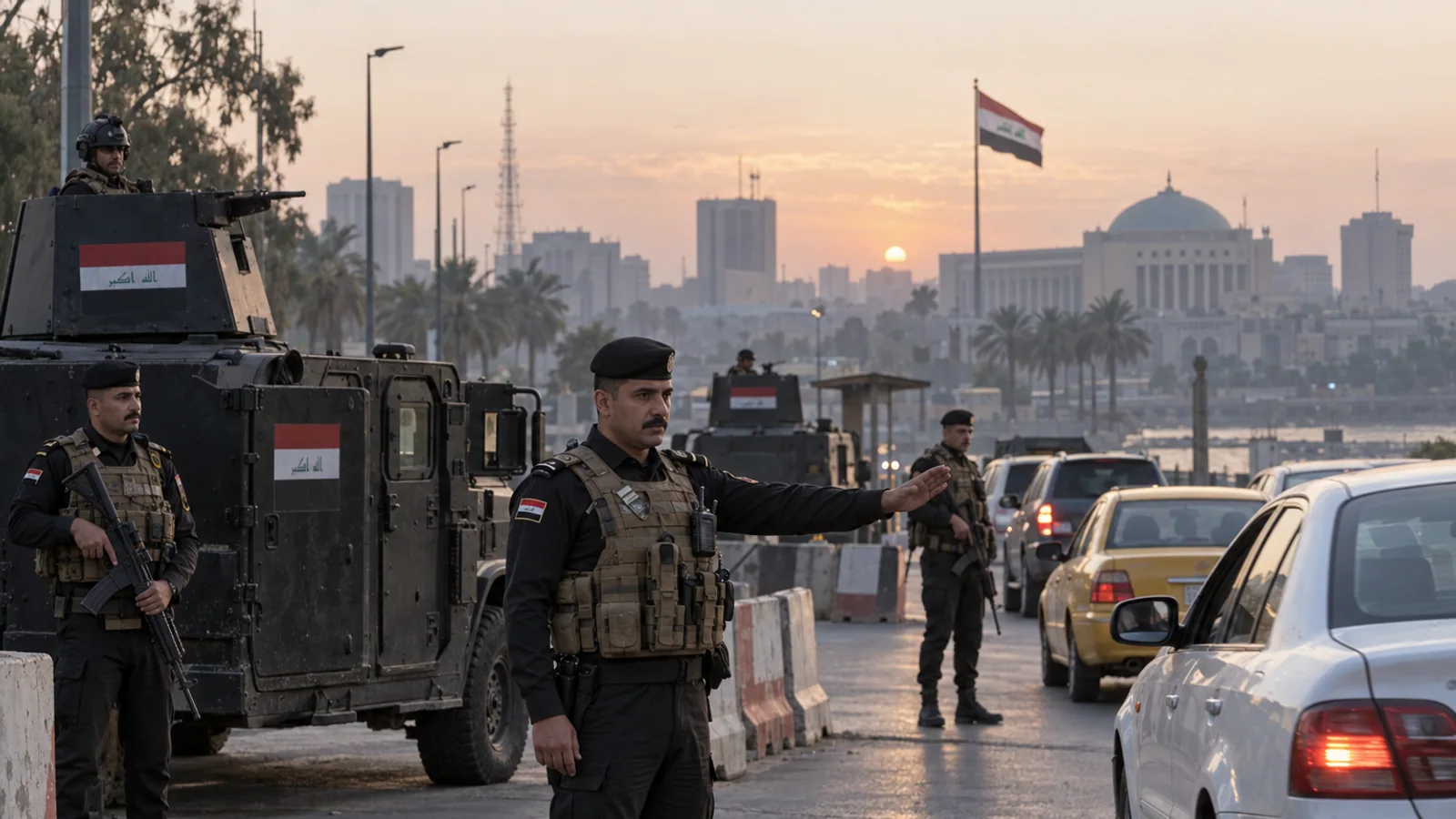
The last 2,500 US troops left Iraq yesterday, alongside British and Italian forces, formally ending Operation Inherent Resolve and transferring full responsibility for security to Iraqi forces. Prime Minister Al-Sadri declared four days of national celebrations to mark the restoration of sovereignty, saying the country was entering a new phase founded on the strength of its own institutions.
The significance of the withdrawal lies in the 23 years that preceded it, and in two distinct military missions. The first began on March 19, 2003, with Operation Iraqi Freedom. George W. Bush was US president, while Saddam Hussein had ruled Iraq for almost 24 years. Washington and the Anglo-American coalition launched an invasion to remove Iraq’s alleged weapons of mass destruction—which proved not to exist—and overthrow Saddam’s regime.
The invasion became an occupation. Saddam’s government collapsed, and he was executed in Baghdad in 2006 for crimes against humanity. But his death did not bring an end to the conflict. Years of violence and insurgency followed, before US troops first withdrew at the end of 2011 under an agreement between President Barack Obama and Iraqi Prime Minister Nouri al-Maliki. By then, according to estimates reported by The New York Times, the violence had cost almost 4,500 American lives and more than 115,000 Iraqi lives.
The situation deteriorated again in 2014. The terrorist organisation ISIS, also known as Daesh, captured Mosul and took control of roughly a third of Iraqi territory. This time, the Iraqi government itself formally requested international assistance. Obama launched the second mission, Operation Inherent Resolve.
Italy’s involvement in this phase began in March 2014 and lasted 12 years. Its work focused on training Iraqi security forces and the Kurdish Peshmerga, the armed forces of Iraqi Kurdistan. After the territorial defeat of ISIS was proclaimed in 2017, the coalition’s role gradually shifted towards strategic support and intelligence-sharing. The legal process for leaving Iraq began under the Biden administration and culminated in yesterday’s withdrawal.
Celebrations of sovereignty do not remove the security concerns. Analysts warn that ISIS sleeper cells could exploit the departure of Western forces to re-emerge. At the same time, armed pro-Iranian militias continue to refuse to surrender their weapons, challenging the authority of the Iraqi state.
The vulnerability of the Kurdistan region adds to those pressures. With foreign troops now gone, the remaining question is not only whether Iraq’s institutions can contain these threats, but whether the country can avoid remaining a battleground between Washington and Tehran.