
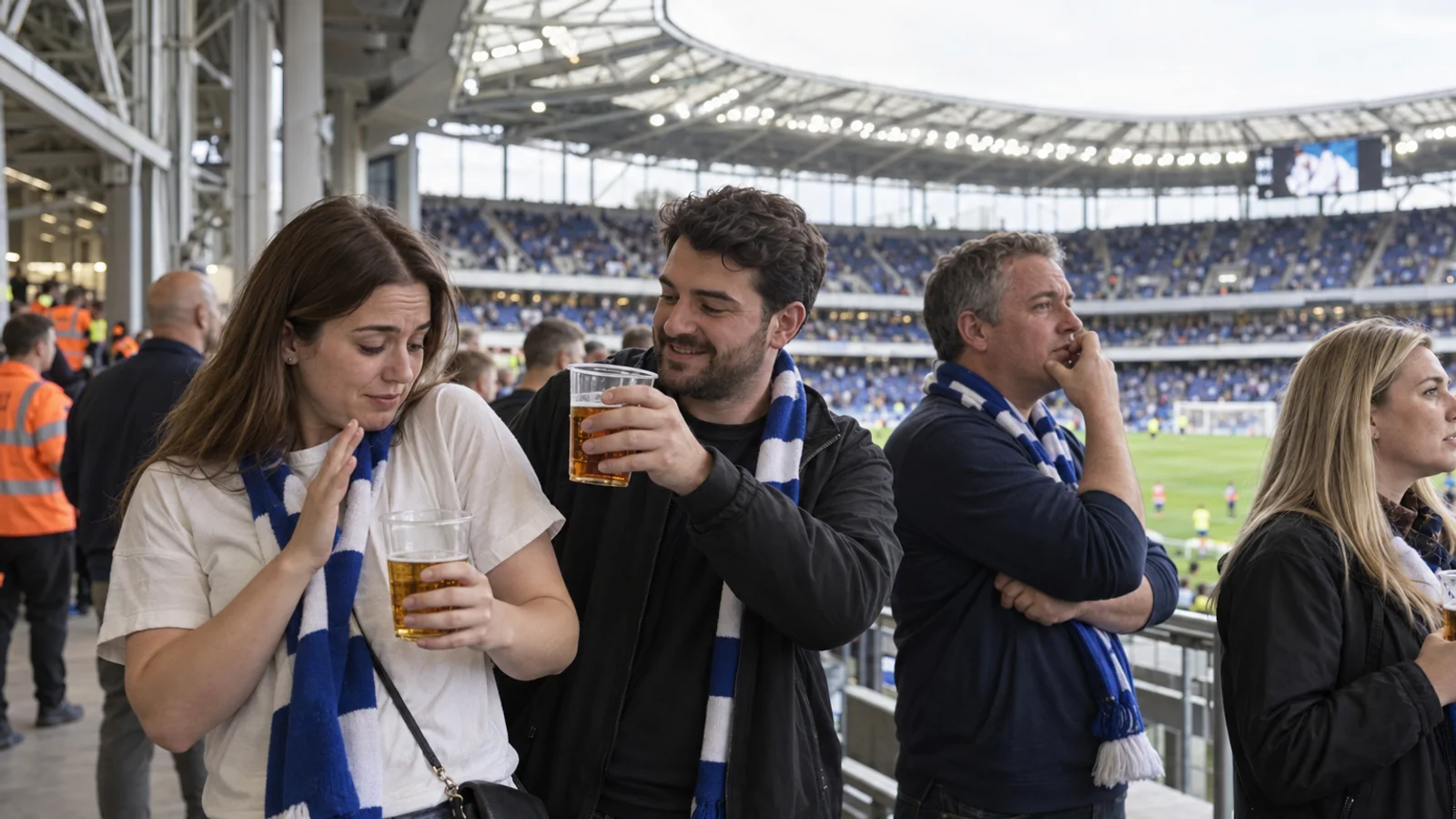
Football supporters can buy a pint at many grounds in England, but in the top five tiers of the men’s game they cannot take it into the stands to drink while watching the match. That distinction — and the different treatment of other sports — is at the heart of calls to review a restriction that has been in place for more than 40 years.
The ban applies to the Premier League, Championship, League One, League Two and National League. Drop down to the National League North or South and supporters can generally drink within sight of the pitch, depending on the club and its licensing arrangements. Following trials, Women’s Super League and WSL 2 clubs can now choose to allow drinking in the stands, too.
Andy Burnham has questioned why those differences should remain. Watching rugby league at Everton’s ground, he pointed out that he could enjoy a pint in a seat where he would not be allowed to do so during an Everton home match. He argues that the legislation belongs to an era when football was very different, and that there is a case for removing the unequal treatment, initially through trials.
That earlier era remains central to the argument against change. Alcohol-fuelled hooliganism at home and abroad in the 1970s and 1980s became known as the “English disease”, while grounds faced serious safety and security problems. Nor has disorder disappeared. At the Euro final at Wembley in 2021, 2,000 England fans broke into the stadium. Alcohol and drugs played a part, and an FA commission report found that fatalities and widespread injury were only narrowly avoided.
The UK Football Policing Unit says other sports do not experience the violence and criminal behaviour seen among football supporters, and that alcohol often contributes. It wants consultation before any change. A former FA executive also argued for consultation, while noting that CCTV and improvements in crowd management had changed how stadiums could tackle disorder.
For Tom Greatrex, chair of the Football Supporters Association, the starting point is choice. Supporters can drink while watching rugby league, attending an Oasis concert or, in some of the same stadiums, watching women’s football. Alcohol is already sold on football concourses and consumed before matches, at half-time and afterwards. Allowing someone to take that drink to their seat does not, in his view, amount to a huge change.
Greatrex also believes the existing arrangements can disrupt the match. Some supporters leave their seats 10 minutes before half-time to beat the queues and return late after the interval. A West Brom supporter speaking on BBC Radio 5 Live made a related point: knowing they cannot drink while watching the game can encourage away fans to rush another beer before heading to the ground. Allowing drinks in view of the pitch, the supporter suggested, might reduce some of that hurried consumption.
West Ham fan Tom Deal sees the prospect very differently. “Fans should be able to celebrate a goal without being covered in beer,” he said. He imagined buying a £100 white away shirt only to have cider spilled down it during a late celebration. For him, the pleasure of a goal could quickly give way to drying off, dealing with a stain and going home smelling of someone else’s drink.
Deal argued that comparisons with concerts and rugby miss something distinctive about football. In his view, the relative rarity of goals makes celebrations particularly intense, while frustration creates risks of its own. He recalled seeing bottles thrown at players at the Conference League final in Prague. Although drinks in the stands would be served in plastic cups rather than bottles, he remained concerned about objects being thrown towards players, including those taking corners.
Other supporters raised less dramatic but persistent irritations. An Arsenal season-ticket holder with an end-of-row seat described repeatedly having to stand for people heading to the toilets or buying beer, missing celebrations in the process. Another caller suggested designated drinking sections, so those who wanted a beer could sit together without imposing the consequences on everyone else.
Greatrex’s case for a review rests partly on how broadly the law applies. He used Torquay United as an example: supporters could drink while watching their club in the National League South, but promotion to the National League would remove that option, despite the same people attending the same stadium in similar numbers. He pointed to Tracy Crouch’s fan-led review, which recommended a trial at that level, and said a majority of EFL clubs wanted trials of changes to the legislation.
Deal countered that the scale of the crowd matters. An arrangement involving a few thousand supporters could not simply be assumed to work in a stadium holding 60,000. He also questioned what beer-throwing celebrations would mean for staff left to deal with the aftermath, and argued that the routine of a pint before kick-off or at half-time did not need fixing.
Greatrex did not accept that beer being thrown around would necessarily become an enduring feature of matches. He regarded it as a fad that could fade, and pointed to the women’s game as evidence that change need not cause the problems opponents anticipate. His argument was for testing rather than assuming the outcome: “But let’s have a pilot, let’s do a study, and let’s see what happens.”
No change to the law is currently planned. The disagreement is not simply between people who drink and people who do not: it is about whether the current restrictions protect the matchday experience or unnecessarily complicate it. Any consultation would have to address both those who want the choice to take a pint to their seat and those who want to watch a goal without wearing one.