
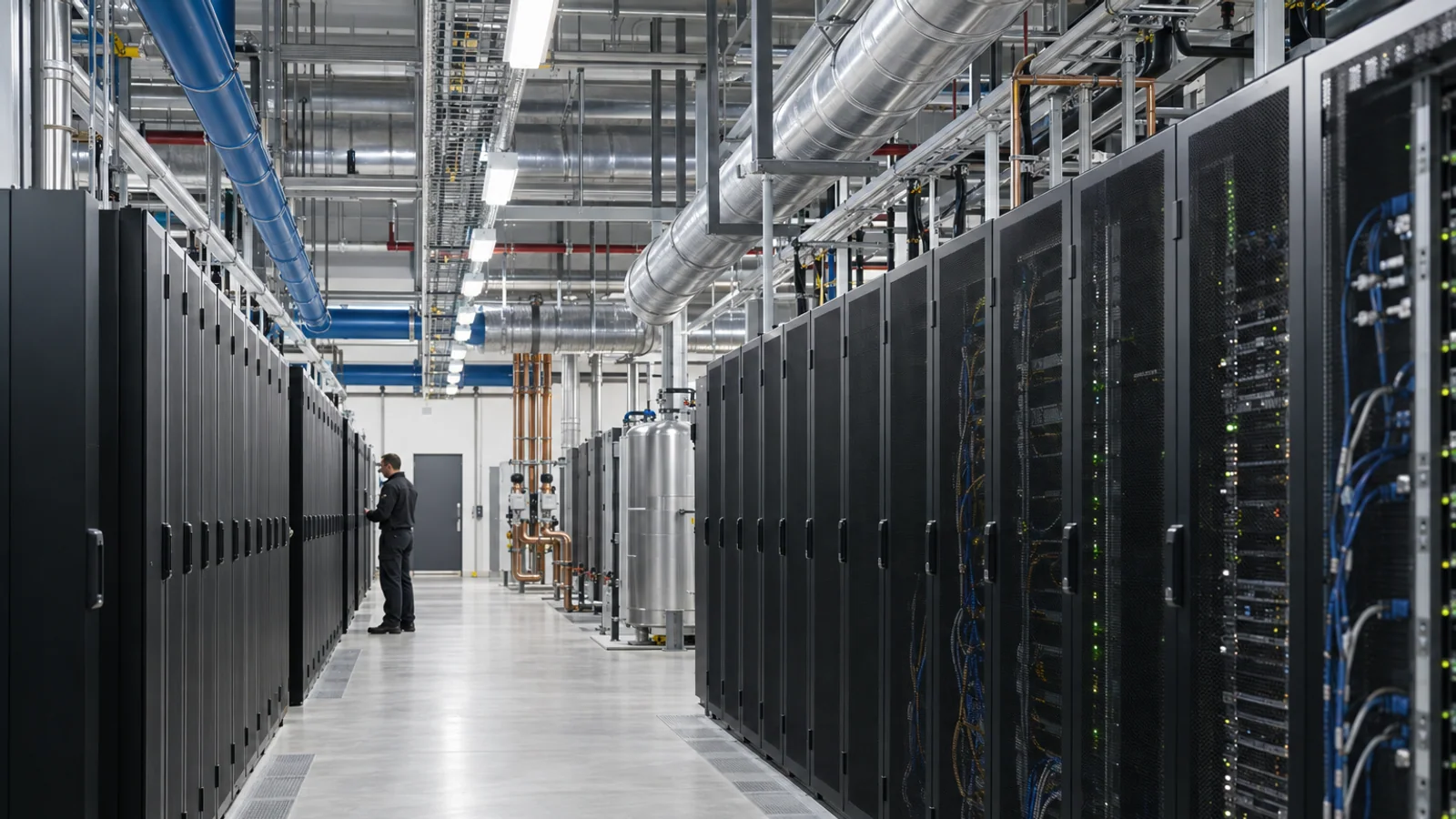
The European Commission has presented a delegated regulation to govern the environmental impact of data centres, an initiative led by Energy Commissioner Dan Jørgensen. The European Parliament and the Council now have two months to raise objections to the measure, which targets infrastructure crucial to the development of artificial intelligence.
From August 2027, sustainability labels would be compulsory for all facilities above 500 kilowatts. Much like the energy ratings used for homes, data centres would receive a grade from A to G based on energy efficiency, water consumption, renewable energy use and the reuse of the heat they generate. But the first consequences are expected sooner. In spring 2027, Brussels is due to present mandatory minimum performance standards, with initial assessments leading to the blocking of less sustainable projects.
For the EU, this is another knife-edge balancing act. It wants to triple computing capacity by 2035 to avoid missing the AI train, but without compromising its climate-neutrality goals. By 2030, data centres are expected to account for more than 3.2% of all European electricity consumption.
The scale of that demand is already striking. If the world’s data centres were a country, they would rank eleventh for electricity consumption. Generative AI has sent that consumption soaring: a single ChatGPT request can use up to 10 watt-hours, ten times as much as a Google search, while generating even a short video can consume as much energy as sending 200,000 emails.
This is not a distant issue for Italy, which ranks ninth in the world by number of data centres. Their presence has already made the debate in the areas hosting them heated and complicated. Understanding how these facilities work, why so many are being built and what rules should govern them is therefore an immediate concern, not simply a question for the future.