
There is a “0% chance” that AI will bring about the end of the world, according to Jensen Huang. The founder and CEO of Nvidia, the chip giant valued at more than $5 trillion, has dismissed recent warnings as irresponsible and lacking a scientific basis. It is meant to be reassuring. But his intervention also reveals the commercial stakes behind the argument over AI’s future.
The debate erupted after another researcher working in AI resigned and delivered a stark warning. Jacob Coxon, who worked at Anthropic, argued that the technology’s own developers firmly believe it could lead to human extinction within the next few years.
Anthropic CEO Dario Amodei subsequently published an essay titled We Must Face the Frontier, calling for a coordinated slowdown in AI development and oversight by independent regulators. OpenAI’s Sam Altman and Elon Musk quickly backed the proposal.
To some, slowing down sounded sensible; to others, the warnings were frightening. Yet the common front also aroused suspicion. One interpretation was that talk of an enormous, imminent danger amounted to apocalypse marketing: a way to inflate company valuations ahead of stock-market listings.
The more consequential suspicion concerns regulatory capture. Under this interpretation, established companies such as OpenAI and Anthropic would push institutions to impose demanding rules and licensing requirements that they could meet, but that would create insurmountable barriers for newcomers. Such restrictions could also obstruct open-source development, entrenching the power of the companies already at the top. That is a suspected motive, not an established explanation for their position.
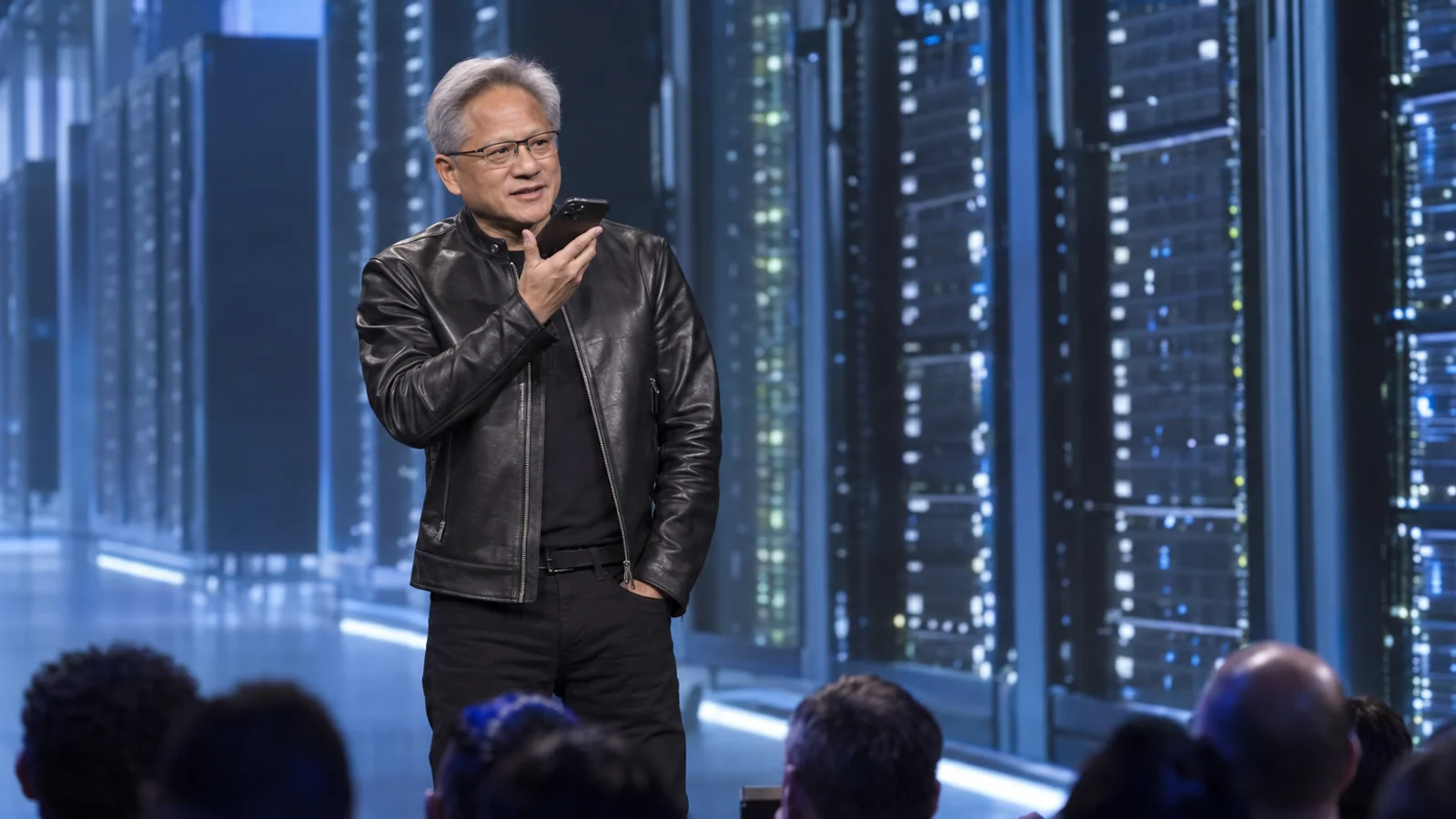
Then came Huang, in his trademark black leather jacket—and with Nvidia’s interests behind him. His company is not primarily a developer of language models. It sells the physical infrastructure, chips and data centers powering the AI race, so a slowdown could come at a substantial financial cost. He may genuinely be convinced that humanity will not disappear by 2030, an alarmingly short horizon. He also has a business to protect.
On AI policy, Huang has become one of Donald Trump’s closest allies. Trump has branded catastrophic-risk warnings a hoax, portraying them as a conspiracy designed to cost the United States its technological leadership and hand the advantage to China.
Their alignment produced a striking scene at a summit: Trump called Huang while he was onstage, and Huang put him on speakerphone in front of the audience. During the call, Trump described data centers as the oil of the next 20 years. Huang, in turn, has fully embraced the White House’s position, arguing that AI needs no new regulations and that existing civil liability and cybersecurity laws should suffice.
The relationship is also set to feature in the next round of diplomacy. Chinese President Xi Jinping is due in Washington on September 24 for a bilateral summit with Trump. Among the small number of business leaders invited to the state dinner is Jensen Huang.