
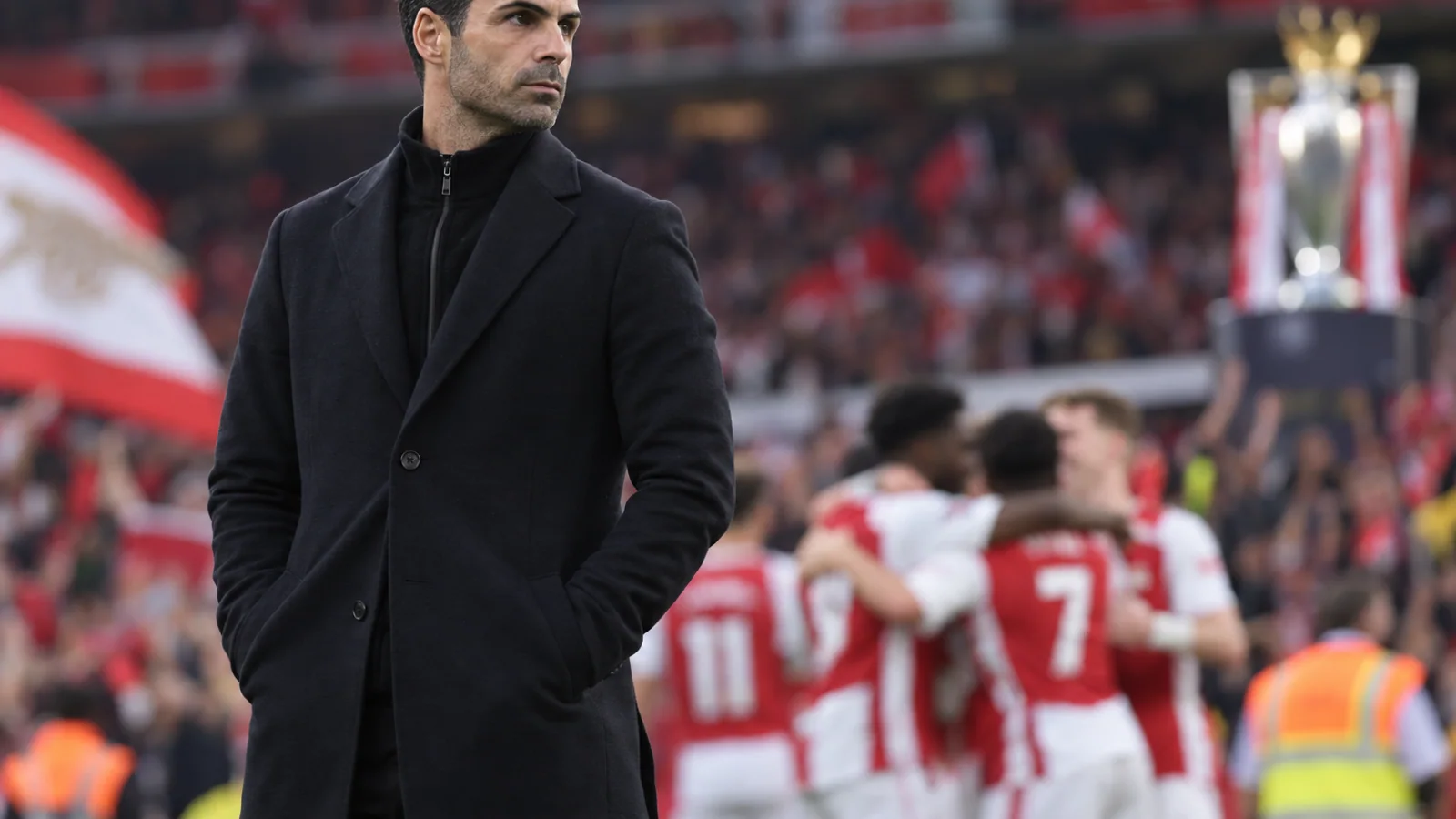
Mikel Arteta has agreed a new contract with Arsenal, with an official announcement expected during the international break. His current deal expires at the end of the season, but the understanding is that an agreement has been in place for a couple of weeks, leaving the formalities to be completed.
Asked by reporter Gary Cotterill last Friday whether he would sign during the break, Arteta offered reassurance rather than a date. “I think we are all very much aligned, and whenever the time is right, we’ll get that done. There is nothing to be concerned about.” Pressed on the timing, he added: “I think we both have the same ambition and the same will, so whenever we have time, we’ll get that resolved.”
Cotterill expects the signing to take place within the next two weeks and says Arteta has no interest in leaving, despite occasional links with other clubs. He also expects him to become the Premier League’s highest-paid manager. In his assessment, though, money is not the driving force: Arteta will want greater influence over the wider organisation, pursuing an ambition not simply to build a team but, in the manager’s words, to “build the best club in the world”.
That ambition is a long way from the uncertainty surrounding his appointment. Arteta had come close to getting the job before Arsenal chose Unai Emery. When Emery’s tenure failed to work out, the club returned to their former player, whose leadership qualities were clear but whose managerial credentials remained untested. He had worked under Pep Guardiola at Manchester City; he had not managed a club himself.
Patience was essential. Arsenal began with back-to-back eighth-place finishes under Arteta and later finished runners-up three years running before finally securing their first Premier League title in 22 years. They also came close to winning the Champions League last season, denied the trophy by a penalty shootout.
The rebuilding extended beyond results. After the success of Arsène Wenger’s early years, followed by a period in which financing the new stadium constrained spending, Arsenal needed a fresh start. Arteta inherited big personalities, including Mesut Özil and Pierre-Emerick Aubameyang, and faced disciplinary issues that required firm, sometimes unpopular decisions. The club backed him through doubts from supporters and pundits, while he persisted with his own approach.
Only a couple of years ago, the criticism was that he could take Arsenal to second place but no further—that winning the title would require somebody else. The Premier League trophy is now his answer. His intensity and deep identification with Arsenal have been central to that journey, alongside a commitment that those who deal with him describe as all-consuming.
Whether that makes him the Premier League’s new “Don” is another matter. The comparison with figures such as Sir Alex Ferguson, Wenger and José Mourinho still comes with a qualification: Arteta is on his way, but Arsenal need more trophies, and a first European Cup, before he reaches that standing.
His immediate task is more practical. Arsenal must respond to what happened against Brighton at the weekend, a result that has prompted questions about whether opponents have found a template for beating them. He also has new players to integrate while trying to improve on a title-winning season.
Defending the championship will bring its own pressures, with Manchester City under Enzo Maresca presenting a significant challenge. City’s succession planning appears to have spared them, at least so far, the disruption Manchester United experienced after Ferguson and Arsenal endured after Wenger. Arteta’s contract would secure continuity at Arsenal, but the demands remain substantial: retain the league title, strengthen the team and go one step further in Europe.