
The White House has launched an online television channel called Trump TV after major U.S. networks suspended their pooled coverage in protest at President Donald Trump’s decision to bar several news outlets from the White House.
The dispute centres on the exclusion of CNN, Politico and MSNBC. Fox and other major television networks have withdrawn from the White House pool in solidarity, according to Luke Broadwater, White House correspondent for The New York Times. The pool allows media organisations to share footage of presidential events and reduce broadcasting costs. The banned outlets say they will sue the administration.
Trump defended the restrictions during an event with New York’s mayor at Gracie Mansion. “I think that these outlets have an obligation to be fair,” he said. Describing them as “fake news,” he argued that he had an obligation to keep them out of the White House and called them “very bad for the country, very bad for national security.” He also dismissed the prospect of a boycott, pointing to the press gathered before him.
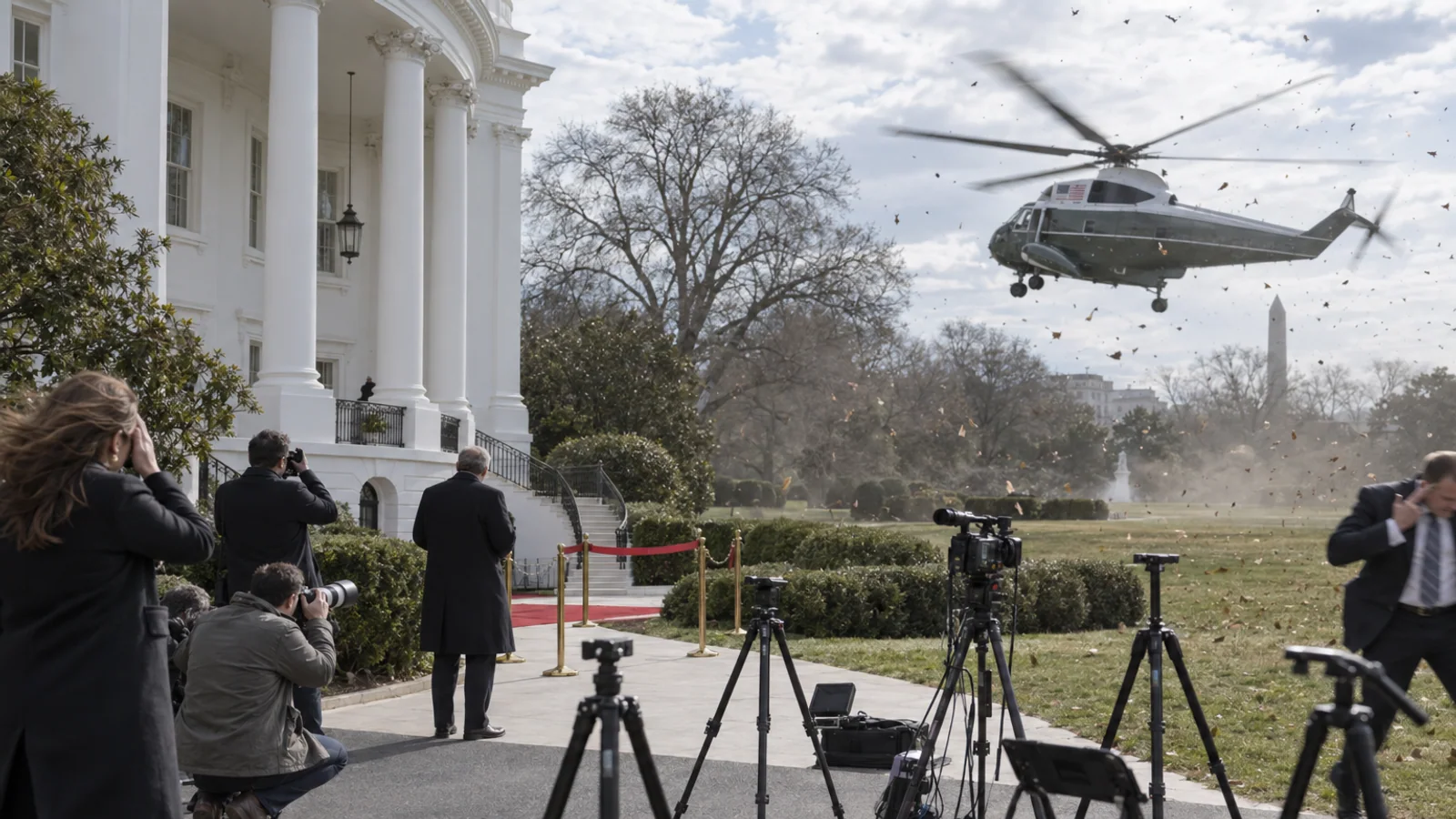
Broadwater described Trump TV as an attempt to fill a void the president had created. Its first effort to stream Trump’s remarks at a White House ribbon-cutting ceremony went badly: without the pool cameras in place, the sound of Marine One’s helicopter blades drowned out the president’s voice.
Trump spoke for some time, Broadwater said, but viewers could not hear him. “We still don’t know what the president said at that event,” he added, calling the launch “inauspicious, to say the least.”
The withdrawal of the networks meant that, for now, major television cameras would be absent from presidential events at the White House. Broadwater said the ban appeared to violate First Amendment precedents and was widely expected to be struck down by a judge. Until then, the president and the press remained in a standoff.
Asked whether Trump’s attacks on “fake news” still resonated, Broadwater said they continued to carry weight with the president’s voters. In his assessment, Trump had spent years conditioning supporters to reject critical investigations, analysis and opinion as dishonest, while treating favourable coverage as legitimate journalism. Those producing flattering accounts of the president, he noted, had remained at the White House.
On immigration, Broadwater said violent incidents during intensified enforcement were weakening support for what had been one of Trump’s strongest political issues. Asked about an ICE shooting in Texas involving a Venezuelan driver, he pointed to two earlier killings in Minnesota as a turning point in public opinion. Voters who had supported tough border enforcement, he said, did not necessarily support the methods being used.
Broadwater cited a Republican congresswoman in Florida who had publicly criticised the implementation of Trump’s immigration policies. Many Americans favoured sealing the border, he said, but opposed heightened violence and what he described as military tactics. Polls, he added, showed that Americans believed Trump had gone too far in some cases.