

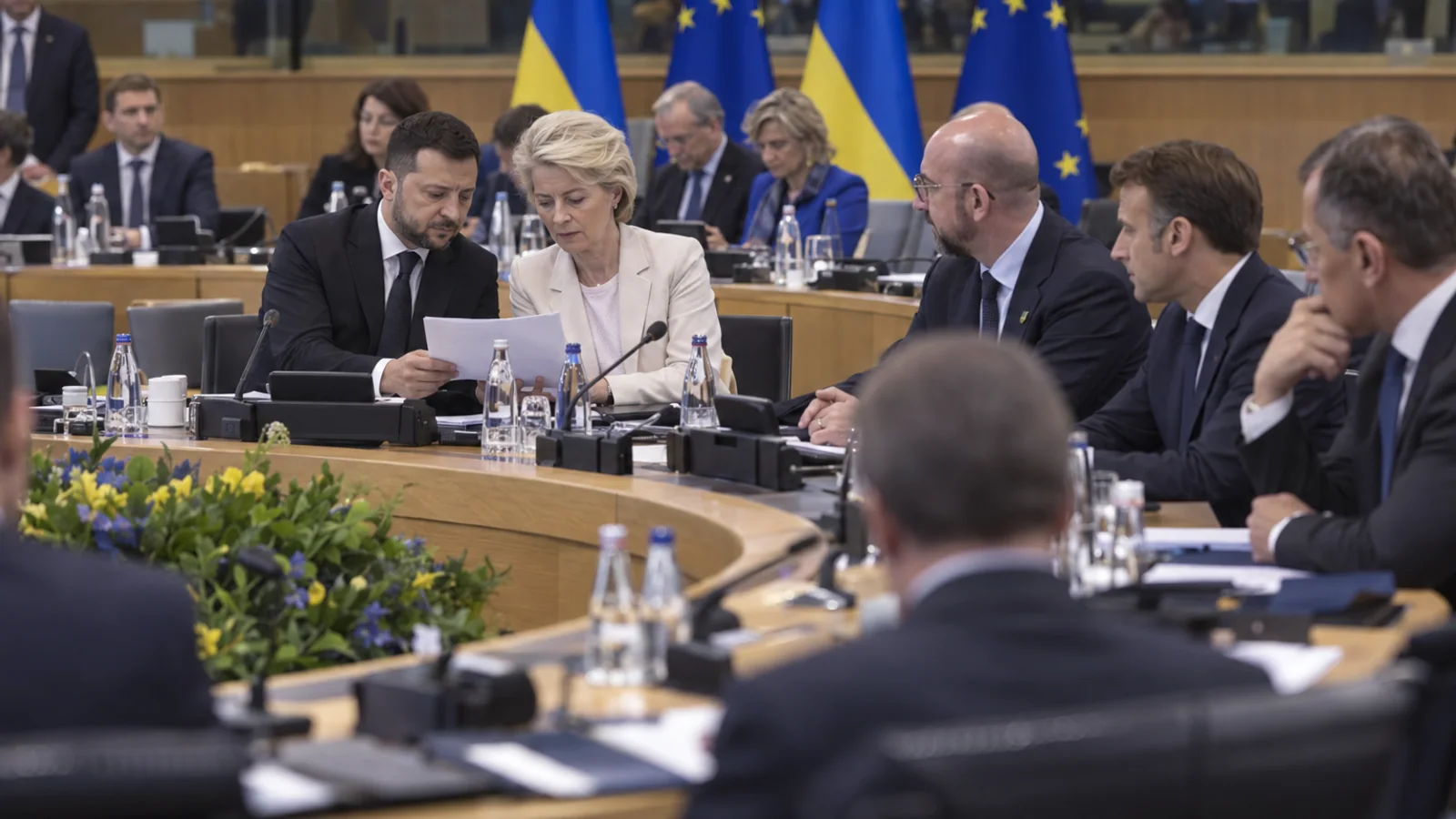
The EU Council has agreed to open two more accession clusters with Ukraine after Hungary lifted its veto, bringing the number of open clusters to four out of six. The decision follows an agreement on protections for Ukraine’s ethnic Hungarian minority, a long-standing demand from Budapest.
Hungary had blocked progress over Ukraine’s education and language laws, arguing that they restricted the use of minority languages in schools. The new law expands protections for eligible minority languages, including their use in school activities and the provision of translated questions in some external exams. Ukrainian remains the language of state education.
The agreement could also lead to the first meeting between Ukrainian President Volodymyr Zelensky and Hungarian Prime Minister Viktor Orbán, possibly at the EU summit in Brussels this week. Diplomats are trying to arrange it, but no date has been set and the meeting is not confirmed.
Opening the clusters marks a step forward, not a guarantee of EU membership. Ukraine still has major reforms to complete, and closing each cluster requires unanimous approval from all EU member states.
Agriculture could prove another major point of contention. Some countries fear that Ukraine’s farm sector could put pressure on EU farmers and their subsidies.