
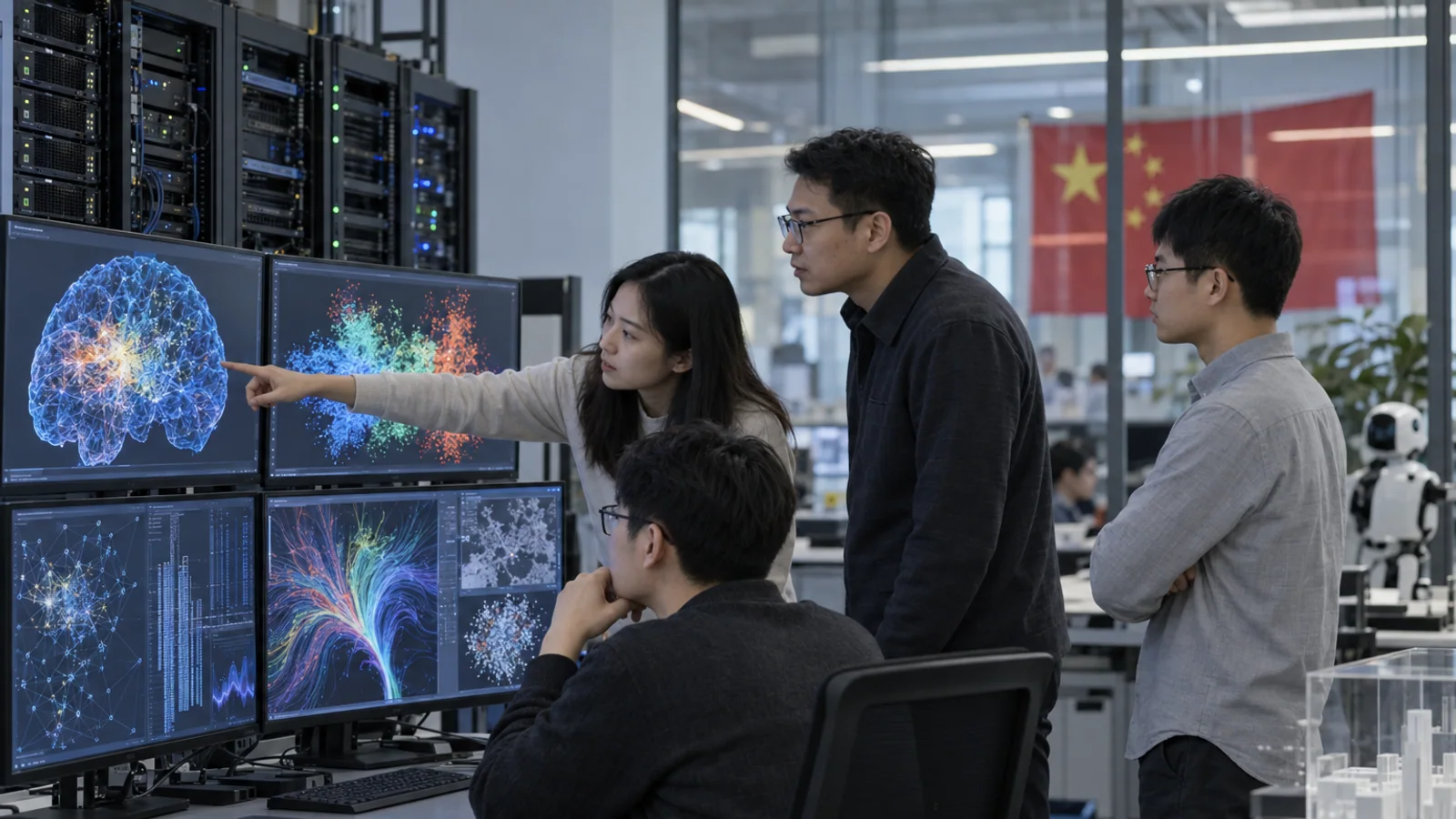
As the debate over artificial intelligence safety turns to government restrictions and the importance of maintaining America’s lead over China, Beijing has offered an apparently reassuring response: developers should be more open about the standards used to build new technologies, making transparency a safeguard. Yet it has also pushed back against proposals that would constrain its own technological ambitions.
Among the measures proposed by ’s Dario Amodei is . This reflects a central dilemma for the United States: slowing development at home while China accelerates could undermine the effort to contain an unpredictable technology and, at the same time, cost Washington an economic and strategic advantage.
An essay published in the , a government-backed Chinese newspaper, directly attacked the recent statements by Amodei and Anthropic. It characterised their position as hypocritical and short-sighted, presenting it as a Cold War tactic: slowing a competitor’s technological development for one’s own benefit. From Beijing’s perspective, the appeal to safety is bound up with an attempt to hold China back.
China, however, already places more rules and constraints on AI development than the United States does. The concerns driving those restrictions are more domestic than global. Rather than the growing American alarm over the possibility of AI becoming a catastrophe for humanity, the Chinese emphasis is on keeping development within boundaries that protect the .
That concern extends to the Party’s potential vulnerability to hacking involving imposed by developers. The issue is not simply the existential safety of human beings, but the security of an existing political system. AI could threaten the regime’s if deliberately used against it by foreign governments—or by someone within China itself.
These are different reasons for wanting safeguards, but they sit against the same competitive backdrop. China is managing to develop low-cost AI models that worry American companies. Its progress sharpens the tension between containing the risks of the technology and retaining the advantages that come from developing it faster.
The question, then, is how credible a slowdown really is. With both the United States and China pursuing strategic advantage, and with each defining the dangers of AI differently, can either power genuinely accept putting the brakes on?