

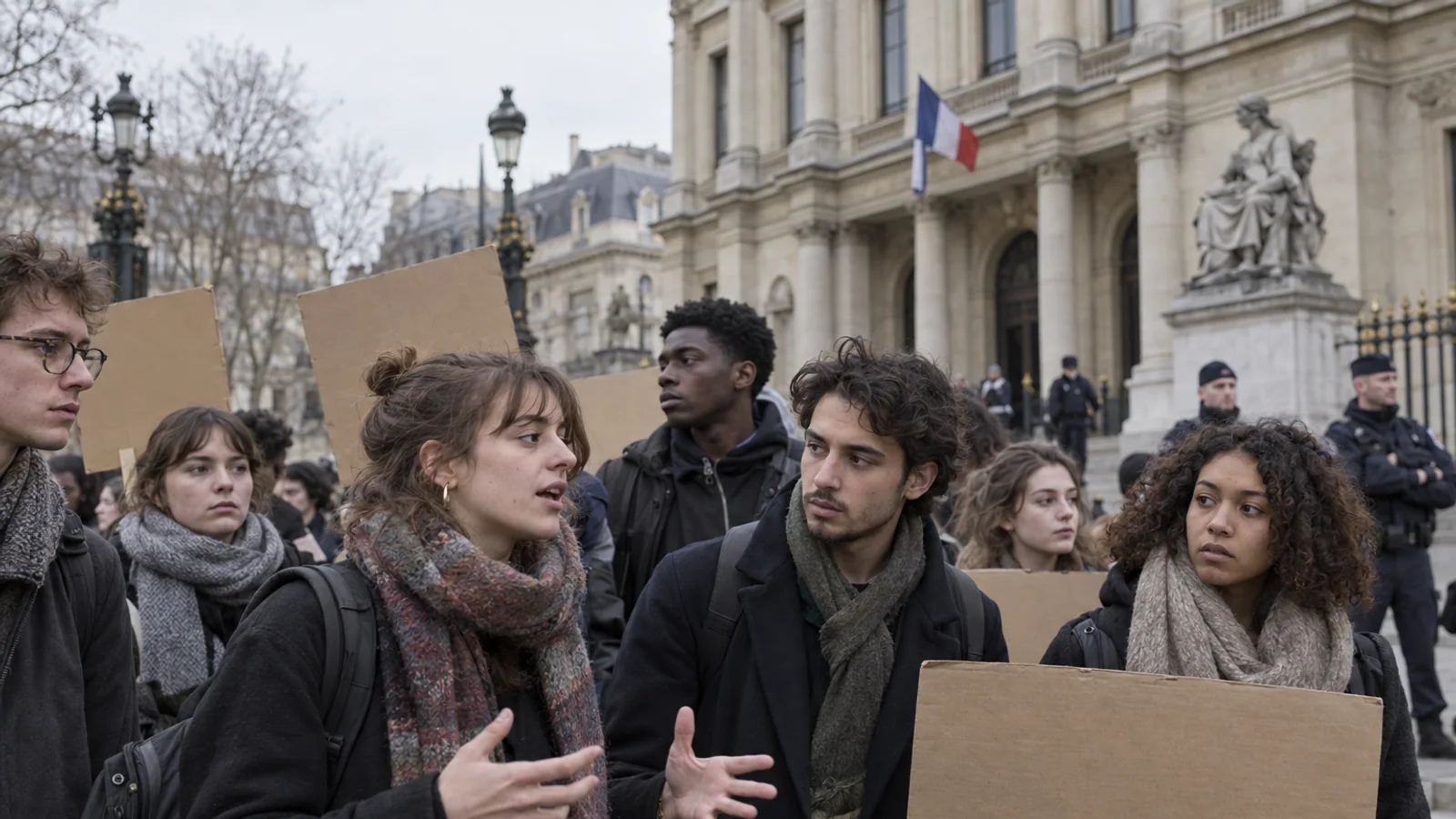
France is caught between demands for more public spending and the need to repair its strained finances. Thousands of students are taking to the streets to demand more resources and better conditions, while and leave the government little room to respond.
For French economist and essayist Nicolas Bouzou, the difficulty goes beyond the immediate budget squeeze. “We are at the end of a system,” he said. He regards as a good thing, but argues that economic growth is no longer strong enough to support it, resulting in large deficits and rising debt.
His sharpest warning concerns borrowing costs. Bouzou said France’s , a level he considers unsustainable for an economy like France’s because it would cause public debt to keep rising.
The size of the debt alone is not the central problem, he argued: other countries also carry heavy debt burdens. What matters most is the persistent deficit and the inability to bring debt down. Political uncertainty compounds that weakness, with the government .
The approaching presidential election adds another source of concern. Bouzou said either the far right or the far left could win, while describing both camps’ programmes as insufficiently precise about how they would address public debt.
Yet he resisted the suggestion that the worst necessarily lies ahead. France still has strengths, he said, pointing to electricity, a strong corporate sector and a government he described as “quite competent”. His diagnosis was not that the economy lacks underlying assets, but that it faces a major public-finance problem.