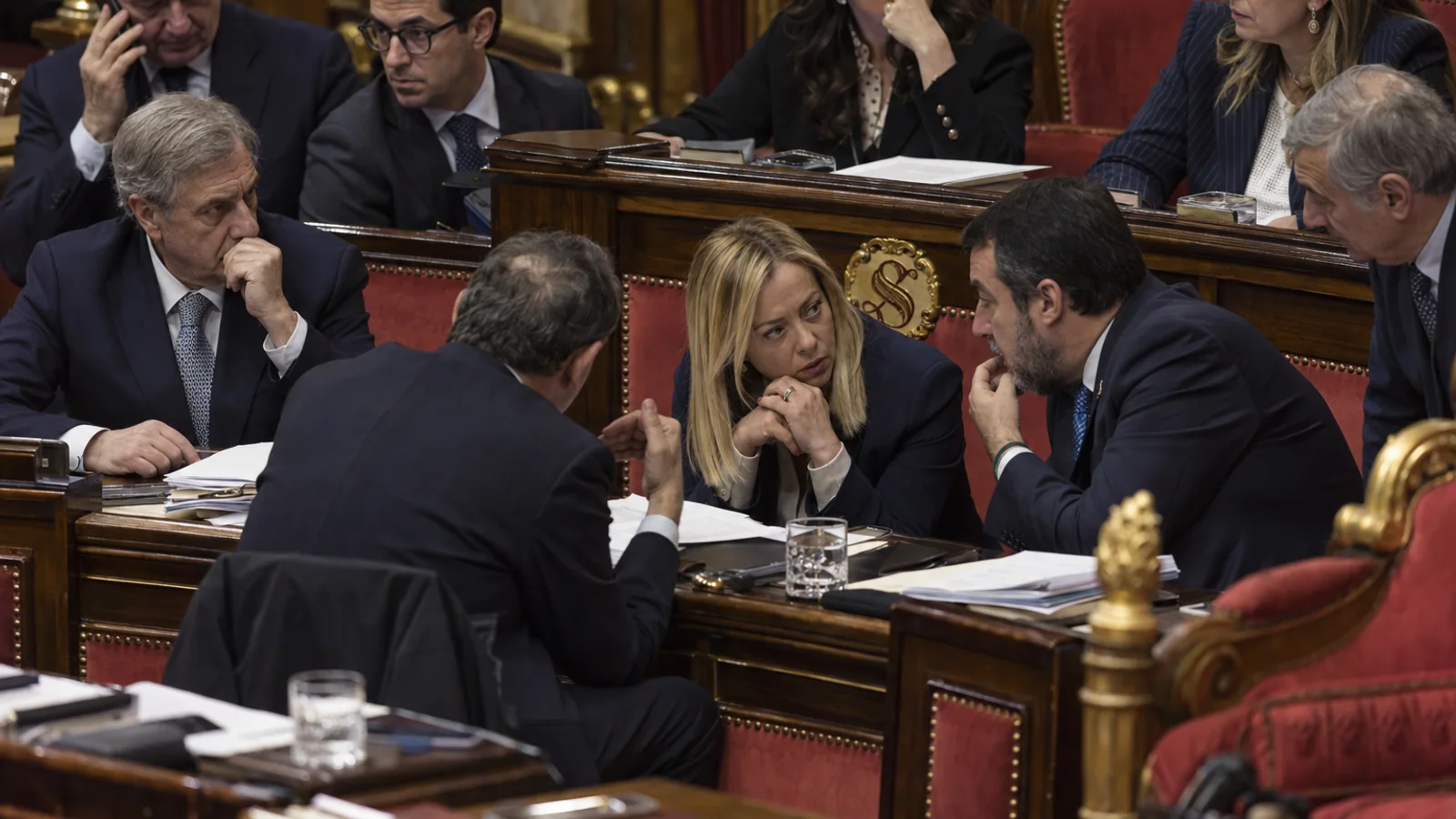
Giorgia Meloni’s governing coalition has avoided another rupture over electoral reform, closing ranks in the Senate after hours of meetings, telephone calls and negotiations. The immediate dispute concerned how much freedom voters should have to choose individual parliamentary candidates. Behind it lay a broader uncertainty: whether the electoral system the government has championed still serves its political interests.
The confrontation began with a Democratic Party proposal to amend an existing amendment and introduce full preference voting. It threatened to reopen the divisions exposed in the Chamber of Deputies in July, when the government suffered a secret-ballot defeat on the issue. That vote triggered a political psychodrama within the coalition, including a hunt for rebels who had opposed preferences—strongly supported by Meloni but particularly unpopular in Forza Italia.
According to Monica Guerzoni, who covered the Senate proceedings for Corriere della Sera, the centre-right’s contortions reflect a changing electoral calculation. Vannacci’s rise has introduced an uncertainty that could weigh heavily on the 2027 election. A reform once regarded as advantageous may no longer offer the coalition its best chance of victory, or even its best protection against a more serious defeat.
In that sense, two electoral laws are in play. One is the reform before the Senate, nicknamed the Melonellum and called the Stabilicum by the governing parties. The other is the Rosatellum, the existing system in use since 2017. Renewed interest in retaining the latter fuelled speculation that the majority might deliberately derail its own bill.
Reports emerged that Brothers of Italy might support the centre-left’s proposal for full preferences. That would have broken with the compromise already reached among the governing parties: a limited form of preference voting in which each slate has a fixed lead candidate, while voters can mark up to three other names from the list. This is not the broader freedom to choose among parliamentary candidates envisaged by the opposition proposal.
The prospect produced hours of tense discussions, calls to Palazzo Chigi and intervention by Senate president La Russa. Vannacci sought to exploit Meloni’s predicament, pressing her to support preferences and reminding her of her earlier backing for them in the Chamber. In the end, the coalition reunited and did not support the opposition amendment.
Whether that settles the reform’s future is less certain. The Senate has changed the text approved by the Chamber in July. After a final Senate vote expected in the coming days, it should return to the Chamber, where consideration is scheduled for September 28 and definitive approval could follow. Ministers speaking after the negotiations argued that, had the coalition wanted to sink the reform, it would have done so in the Senate. Guerzoni nevertheless did not rule out renewed challenges in the lower house.
One particularly contentious consequence concerns women’s representation. The proposed system retains fixed lead candidates, positions that parties most often assign to men. Some smaller or medium-sized parties could consequently end up electing no women at all. The prospect has caused considerable unease among female parliamentarians, including those on the right, and could prompt further resistance when the bill returns to the Chamber.
The reform also drops the Rosatellum’s 60–40 gender rule, including its 40 percent minimum for the less-represented gender—historically women. The concern is therefore not simply about how voters express their preferences, but about who reaches Parliament. The coalition has contained its immediate dispute. It has not resolved the tensions underlying it.