

Cristiano Ronaldo has apologised for walking out of Portugal’s national team camp but insists his international career is not over, setting out a detailed account of the broken promises he says led to his departure.
In a statement running to around 2,000 words, Ronaldo traced the dispute with head coach from an agreement over his playing time to an for managing the public fallout. His position is that he accepted he could no longer play every game. What upset him was how he was treated.
According to Ronaldo’s account, he had been ready to retire from international football after Portugal’s World Cup exit. On the flight home, however, the president of the Portuguese federation urged him to continue and raised the possibility of appointing Jesus, his club manager at Al Nassr. Ronaldo enthusiastically supported the choice and agreed to carry on.
At a subsequent meeting in Lisbon, Jesus outlined a reduced role across four : Ronaldo would play in the two home games but would not be needed for the trips to Norway and Denmark. Ronaldo says he rejected the suggestion that he should miss the away trips altogether. He wanted to travel with the squad, even if he did not play, because he regarded himself as part of the team.
The first rupture came in Norway. Having played against Wales at home, Ronaldo arrived expecting to sit out the next match. He says Jesus approached him at lunchtime and told him he would be needed for 30 minutes. Ronaldo agreed, then warmed up repeatedly after half-time without being called on. Upset at being left unused, he left the pitch at the final whistle without acknowledging the supporters—something for which he has now apologised.
What followed was an unusually detailed attempt to control the response. Ronaldo says he and Jesus agreed an eight-point plan that the coach would follow at his next press conference. Ronaldo included that plan in his statement. One proposed line read: “I made a mistake by having a player of the stature of Pelé or Maradona only warm up without involving him in the match. If it were today, I would not do it.” The plan also called for Jesus to praise Ronaldo’s standing in the game and his willingness to sign autographs and pose for photographs with fans.
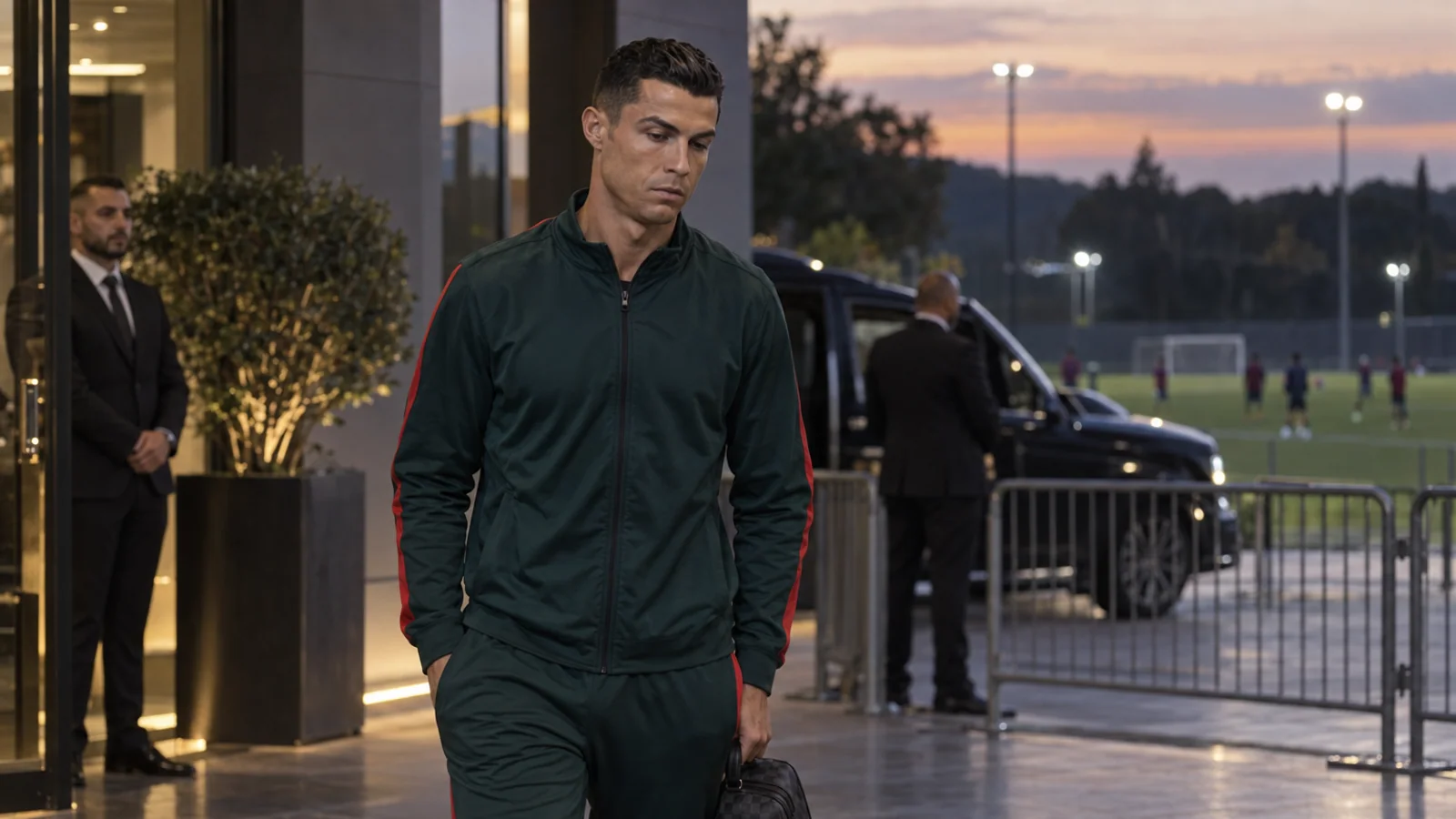
Jesus did not follow the agreed script, according to Ronaldo, who regarded that as another broken promise. He then decided to leave the camp in Denmark and fly out on his private jet. His explanation is that staying would have made him a distraction; leaving, he believed, would help the team.
Ronaldo nevertheless acknowledged that his actions had consequences. He apologised to the Portuguese people and said he would accept any punishment, recognising that his responsibilities as captain required him to set an example. Alongside that apology came a clear insistence that he wanted to represent Portugal again.
There is another side to the dispute: a manager’s right to change his mind. Jesus has drawn a distinction between working in Saudi club football, where he said a club president could instruct a coach to play Ronaldo, and managing Portugal, where he considers . Chief correspondent Solhekol suggested that Jesus may simply have reassessed the Norway match as it unfolded. Portugal were leading only 2-1, and the decision not to introduce Ronaldo was followed by a victory.
Nor, in Solhekol’s assessment, is Ronaldo certain to win any power struggle. He said many people in Portugal were backing Jesus, valuing a coach prepared to stand up to the captain. Portugal have won their last four matches, strengthening the argument that the team can succeed without relying on its most celebrated player.
The disagreement revives a familiar question about how Ronaldo’s international career should end. Fernando Santos’s decision to bench him for Gonçalo Ramos at the 2022 World Cup prompted calls for him to retire. Roberto Martinez subsequently selected him consistently. Jesus is now taking a different approach, although Ronaldo maintains that rotation itself was never the problem.
A partnership that appeared promising—the pair had won the Saudi Pro League together at Al Nassr—has become a clash over respect, authority and who decides what serves Portugal best. Solhekol saw room to understand both men: an exceptional player struggling with how he has been handled, and a coach whose obligation is to the whole team.
The next focus is the November international break. Ronaldo, who turns 42 in February, is still seeking a and does not want this departure to be his final act for Portugal. Whether that return can come with Jesus still in charge remains unresolved.